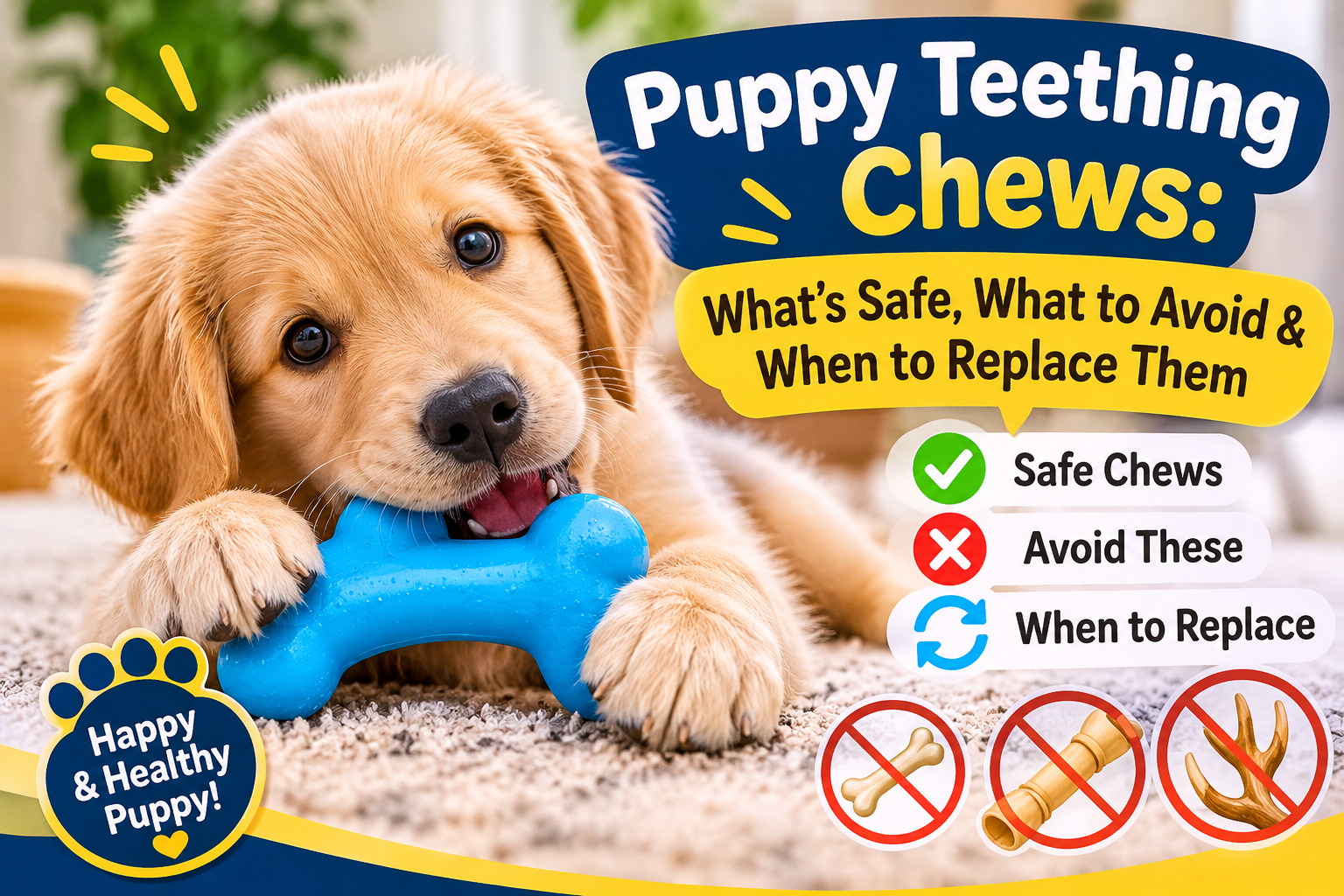
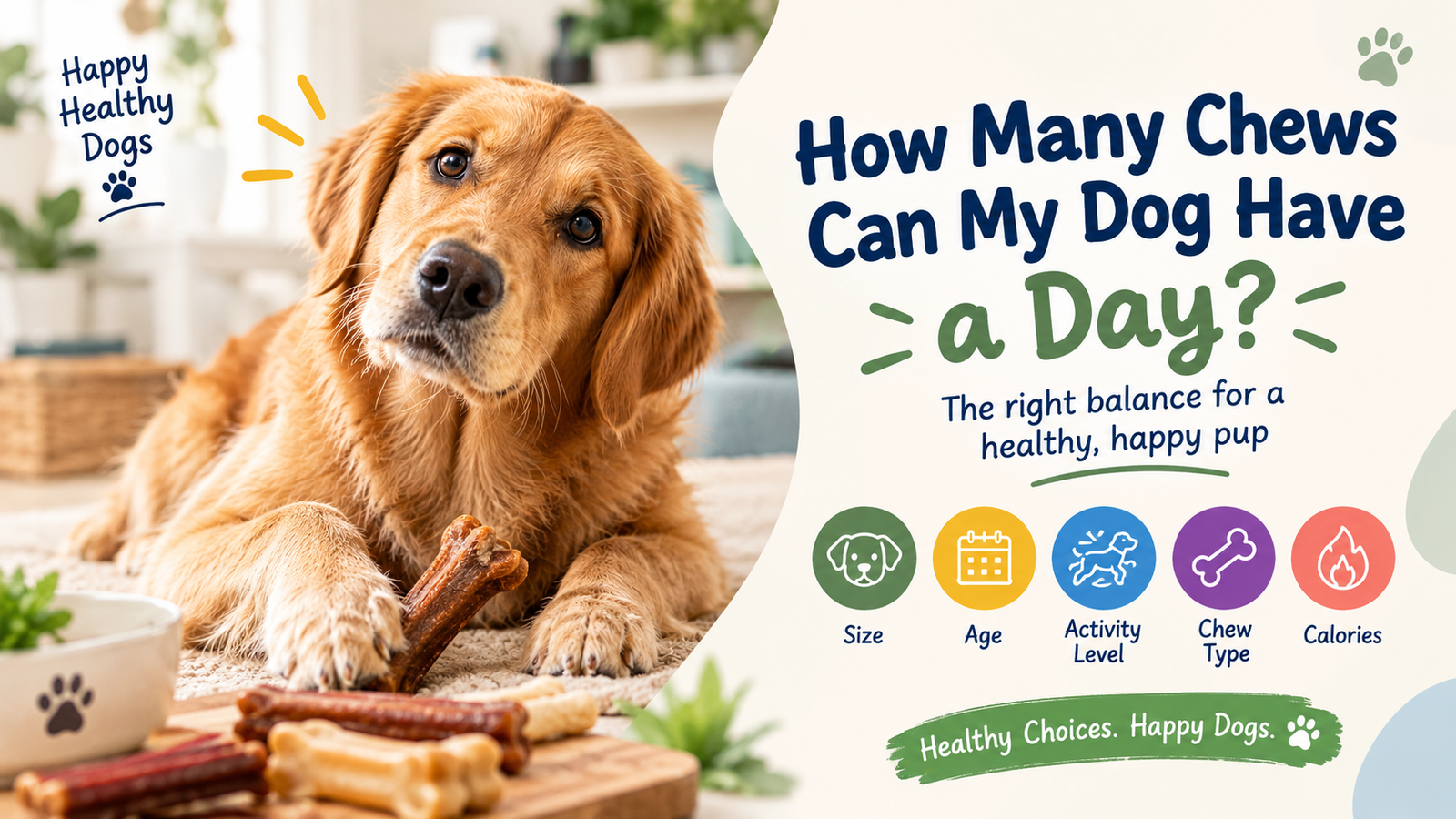
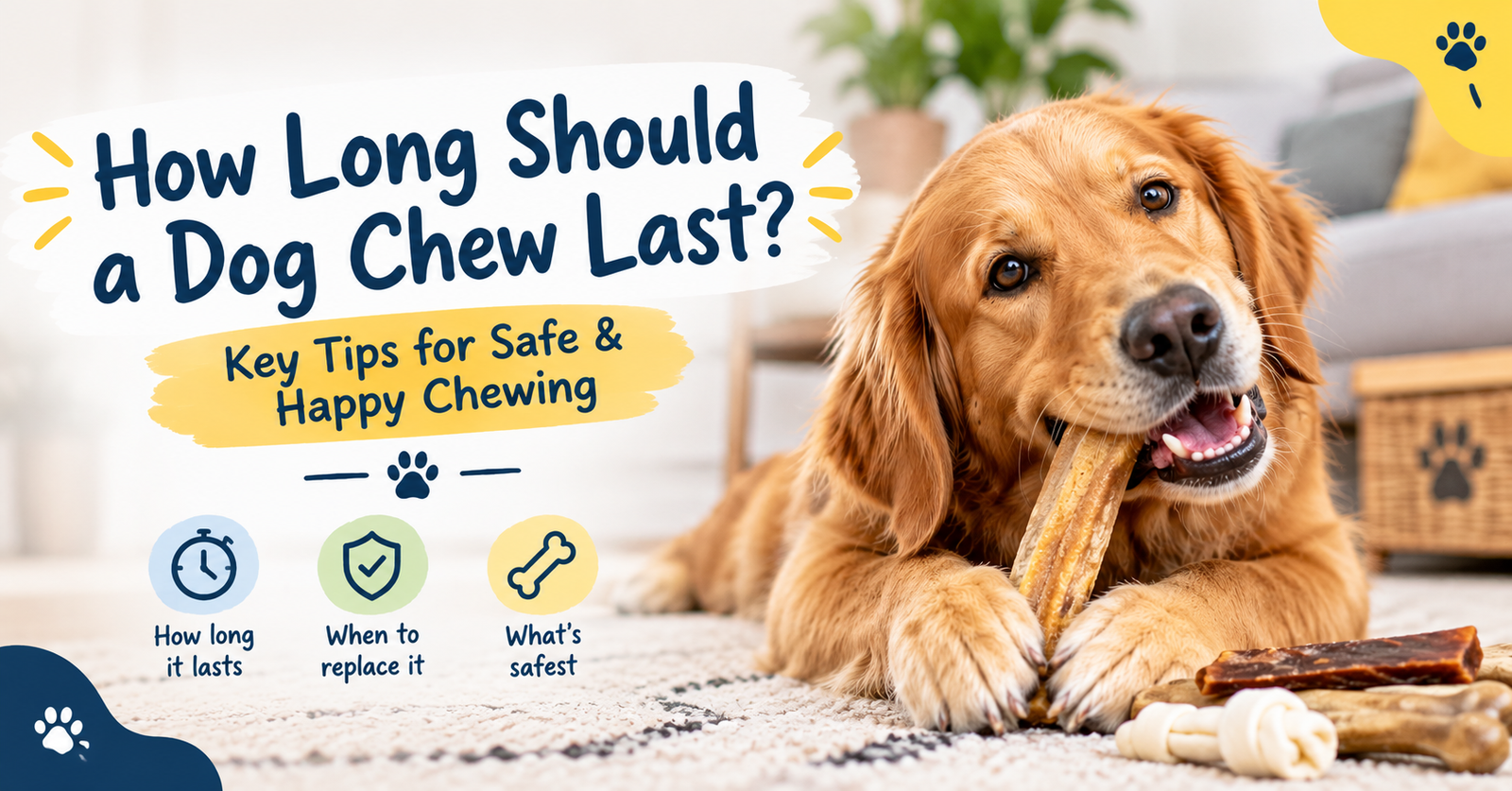
If your puppy is currently gnawing on your shoes, furniture legs, or rug corners, you are seeing a standard stage of canine development. Chewing is normal for growing dogs, especially while they are teething. Giving them a suitable chew toy or treat provides a healthy outlet for that instinct, but not every item on store shelves is appropriate for a puppy’s mouth.
A toy that works well for a 2-month-old toy breed can present a choking hazard or fall apart under the jaws of a 4-month-old retriever. Choosing a safe option depends on matching the chew to your puppy’s physical size, age, jaw strength, and chewing intensity. Building good safety habits early like pairing chew time with proper crate training routines, helps protect both your home and your dog.
This guide explains how puppy teething works, how to evaluate chews before buying them, which common hazards to avoid, how to check toys for wear, and when a chewing incident requires a call to your veterinarian.
The Puppy Teething Timeline
Puppies are born without teeth. Over their first few weeks, 28 baby (deciduous) teeth erupt through the gums. Between roughly 3 and 7 months of age, those baby teeth fall out to make room for 42 adult teeth. Mo st puppies finish teething around six to seven months of age, though timing can vary by breed and size.
Clinical resources from VCA Animal Hospitals note that as adult teeth push through the jawbone, puppies experience localized gum irritation and pressure. Chewing on objects offers mechanical pressure that helps relieve that dull ache while helping puppies explore their surroundings.
Teething vs. Adolescent Chewing
Puppy owners often wonder why their dog continues to destroy household objects long after their adult teeth have come in. It helps to separate physical teething from adolescent behavior:
- Teething Phase (Typically Ages 3 to 7 Months): Driven primarily by physical discomfort as baby teeth shed and permanent teeth emerge.
- Adolescent Chewing (Ages 7 to 24 Months): Once adult teeth finish erupting around six to seven months, physical teething ends. Continued chewing throughout adolescence is typically driven by high energy, curiosity, boredom, or instinctual habit.
Recognizing this distinction helps you plan. Offering safe chews is not just a brief fix for early puppyhood managing chew safety is a core part of basic puppy care and nutrition throughout your dog’s first two years.
Evaluating Puppy Chews: Practical Selection Rules
No chew toy or edible treat is completely risk-free for every dog. Rather than trusting broad packaging claims like Ideal for All Puppies, evaluate items using these criteria:
1. Flexible Rubber Toys
Toys designed specifically for puppies generally use softer rubber compounds than adult chew toys.
- What to evaluate: Bend the toy with your hands or press your thumb into the surface. It should yield slightly under pressure rather than feeling like hard stone.
- Sizing: Choose a toy that is significantly wider than your puppy’s open mouth. Avoid anything small enough to be pushed past the front teeth into the throat or wedged across the roof of the mouth.
- Practical use: Hollow rubber toys can be stuffed with wet puppy food or pumpkin purée to create a longer, slower chewing task that discourages rapid destruction.
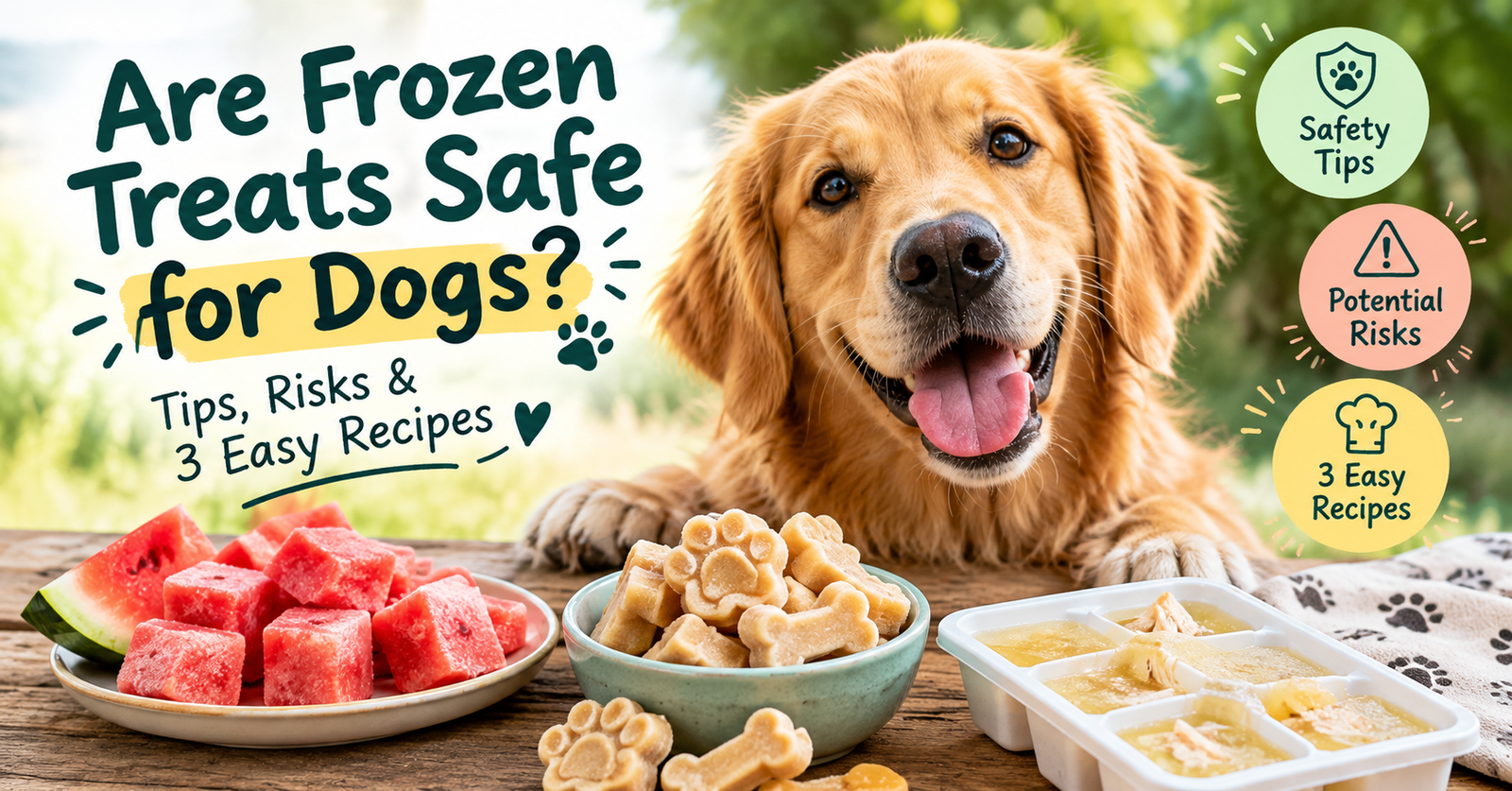
2. Freezable Toys & Ice Safety
Chilled or frozen toys can soothe tender gums, but the material choice and supervision matter:
- What to evaluate: Use flexible rubber or fabric toys specifically designed by the manufacturer to hold frozen liquids or food, following all included usage instructions.
- Safety precaution: Avoid letting puppies chomp on solid ice cubes or thick frozen blocks. Biting down hard on unyielding ice can chip thin baby enamel and damage adult teeth. Freezing wet food inside a flexible rubber toy offers a cold, pliable texture with a lower risk of dental injury than solid ice. Always supervise frozen toy sessions closely.
3. Edible Chews (Bully Sticks & Collagen)
Chews marketed as digestible, such as single-ingredient bully sticks or collagen sticks, are popular, but they require active supervision.
- What to evaluate: Select a size appropriate for your puppy’s current weight. Saliva softens these items as the puppy chews, but aggressive chewers can still tear off unchewed pieces.
- Safety precaution: Even items marketed as digestible can cause choking or intestinal blockages if swallowed whole. A digestibility label does not guarantee safety. Supervise every session and remove the chew as soon as it wears down to a size small enough for your puppy to attempt to gulp down.
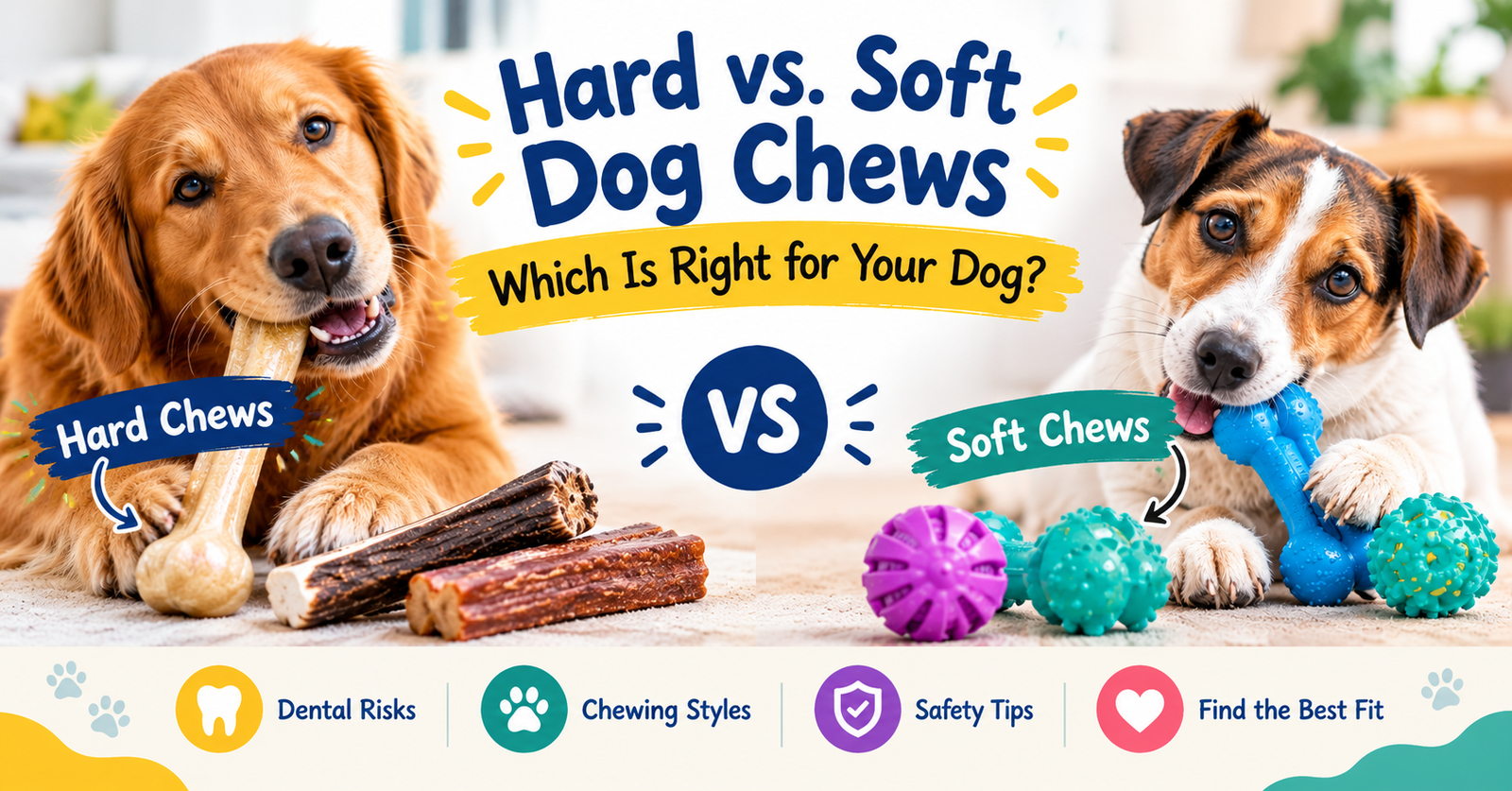
At-a-Glance Option Comparison
Chew Category | Material Type | Safety Benefit | Potential Hazard | Primary Safety Rule |
Puppy Rubber Toys | Soft synthetic rubber | Gentle on baby teeth flexible yield | Can split if used by adult power-chewers | Ensure toy is wider than open jaw gap |
Freezable Toys | Fabric or rubber | Cold therapy soothes swollen gums | Hard ice blocks can chip thin enamel | Freeze wet purée inside flexible rubber; supervise use |
Edible Chews | Collagen / Bully stick | High engagement; marketed as digestible | Choking risk if small stubs are swallowed | Remove when stub is small enough to gulp |
Traditional Rawhide | Dried animal hide | Long-lasting texture | Choking hazard or intestinal obstruction if unchewed chunks are swallowed | Supervise closely and remove softened or detached pieces immediately |
Bones & Antlers | Natural bone/horn | Natural appeal | Can fracture baby and adult teeth; splinter risks | Avoid hard bones and antlers choose softer, appropriately sized chews |
Quick Screening Checklist
Use these key practical checks when shopping for or inspecting any chew:
- The Indentation Test: Press your fingernail firmly into the surface. As a general screening guideline, ensuring the material yields slightly or flexes under pressure can help protect delicate enamel, though it does not guarantee complete safety against all chewing styles.
- Size Verification: Ensure the chew cannot fit entirely inside your puppy’s mouth. When choosing between two sizes, select the larger one.
- Manufacturer Ratings: Follow age and weight recommendations on the packaging. Do not give adult-rated toys to young puppies, or toy-breed chews to large-breed puppies.
- Cleanability: Make sure the toy can be washed according to manufacturer instructions. Discard toys with cracks, crevices, or porous materials that cannot be cleaned properly.
- Structural Integrity: Check for manufacturing defects, loose squeakers, or thin rubber seams before handing the toy over.
Common Hazards & Chews to Avoid
Several items frequently offered to dogs carry a risk of tooth damage or internal injury.
According to veterinary dental resources from the Cornell University College of Veterinary Medicine, ultra-hard materials such as real animal bones, deer antlers, hooves, and rigid nylon chews can fracture teeth in dogs of any age. Baby enamel is thin, and developing or fully erupted adult teeth can suffer painful slab fractures if a dog bites down with full force on an unyielding object.
Traditional Rawhide
Traditional rawhide chews are made from dried animal hides that soften slowly under saliva. The primary safety concern with rawhide is the risk of choking or gastrointestinal obstruction if a puppy tears off and swallows a large, unchewed piece whole. Because these pieces resist rapid digestion in the stomach, they can become lodged in the esophagus or intestinal tract. Regardless of whether a rawhide product claims to be digestible, always prioritize proper sizing and continuous supervision to prevent swallowing chunks.
Household Objects (Sticks, Bottles, Shoes)
Allowing puppies to chew on everyday items introduces preventable risks:
- Sticks: Wood splinters easily under jaw pressure. Sharp fragments can pierce mouth tissue or puncture the digestive tract if ingested.
- Plastic Bottles: Thin plastic breaks into sharp shards that cut gums, and loose caps pose an immediate choking hazard.
- Shoes: Footwear contains grommets, laces, and dyes that can be swallowed, teaching your puppy that household leather and fabric are acceptable toys.
Toy Inspection & Replacement Signs
Chew toys wear out over time. Instead of relying on a fixed calendar schedule, inspect your puppy’s toys before and after every use.
When to Discard a Toy
Remove and replace a chew toy immediately if you spot any of the following signs:
- Structural Damage: Deep cracks, missing rubber pieces, or peeling layers.
- Exposed Elements: Loose squeakers, visible internal stuffing, or exposed cores.
- Frayed Threads or Ropes: Loose rope strands or pulling fabric. Swallowed threads can cause linear foreign body obstructions, where string becomes caught in the gastrointestinal tract and pulls the intestines together.
- Outgrown Size: The toy has become small enough for your growing puppy to swallow whole or pose a choking hazard.
When to Contact Your Veterinarian
Active supervision is your primary safety measure, but accidents can happen. Knowing how to respond helps you manage the situation effectively.
Medical Emergencies (Immediate Care)
Go directly to an emergency veterinary hospital if your puppy shows acute distress:
- Active Choking: Pawing frantically at the mouth, heavy coughing, gagging, inability to breathe, or pale/blue gums.
- Severe Distress: Sudden collapse, extreme weakness, or continuous crying from pain.
Situations Requiring Prompt Veterinary Contact
Call your veterinary clinic right away for guidance in these situations:
- Suspected Foreign Ingestion: If you saw or suspect your puppy swallowed a squeaker, plastic fragment, rope strands, or a large piece of an edible chew, call immediately. Do not wait for symptoms like vomiting to start. Do not induce vomiting at home unless your veterinarian explicitly instructs you to do so, as returning objects can cause further tearing or airway blockage.
- Digestive Obstruction Symptoms: Repeated vomiting, inability to keep water down, abdominal bloating or pain, loss of appetite, or unusual lethargy.
- Fractured Teeth: If you spot a cracked or broken tooth. Broken teeth expose sensitive nerve pulp, causing pain and creating a pathway for infection that requires professional care.
(Note: Finding a speck of blood on a toy during normal tooth shedding is common. However, continuous bleeding or red, swollen gums warrant a call to your vet.)
Conclusion:
Navigating your puppy’s teething phase takes a mix of patience, consistency, and active management. Chewing is a natural and essential part of your puppy’s physical development, but keeping those tiny, sharp teeth safe comes down to three key steps: choose flexible, appropriately sized chews, supervise every session, and regularly inspect toys for wear.
No chew is risk-free, but by avoiding ultra-hard objects like bones or antlers and discarding worn-out toys before they become hazards, you can protect your puppy from painful dental fractures and intestinal blockages. Keep a close eye on their chewing habits, adapt their toys as they grow, and don’t hesitate to contact your veterinarian if you ever suspect an injury or swallowed object. With the right chews and careful oversight, you can help your puppy sail through teething with a healthy smile and a happy home.

 All Products
 All Products
 All Products
 All Products
 All Products
 All Products
 All Products
 All Products
 Combos
 All Products
 All Products
 Combos
 Combos
 Goat Milk Treats
 Combos
 Combos
 Combos