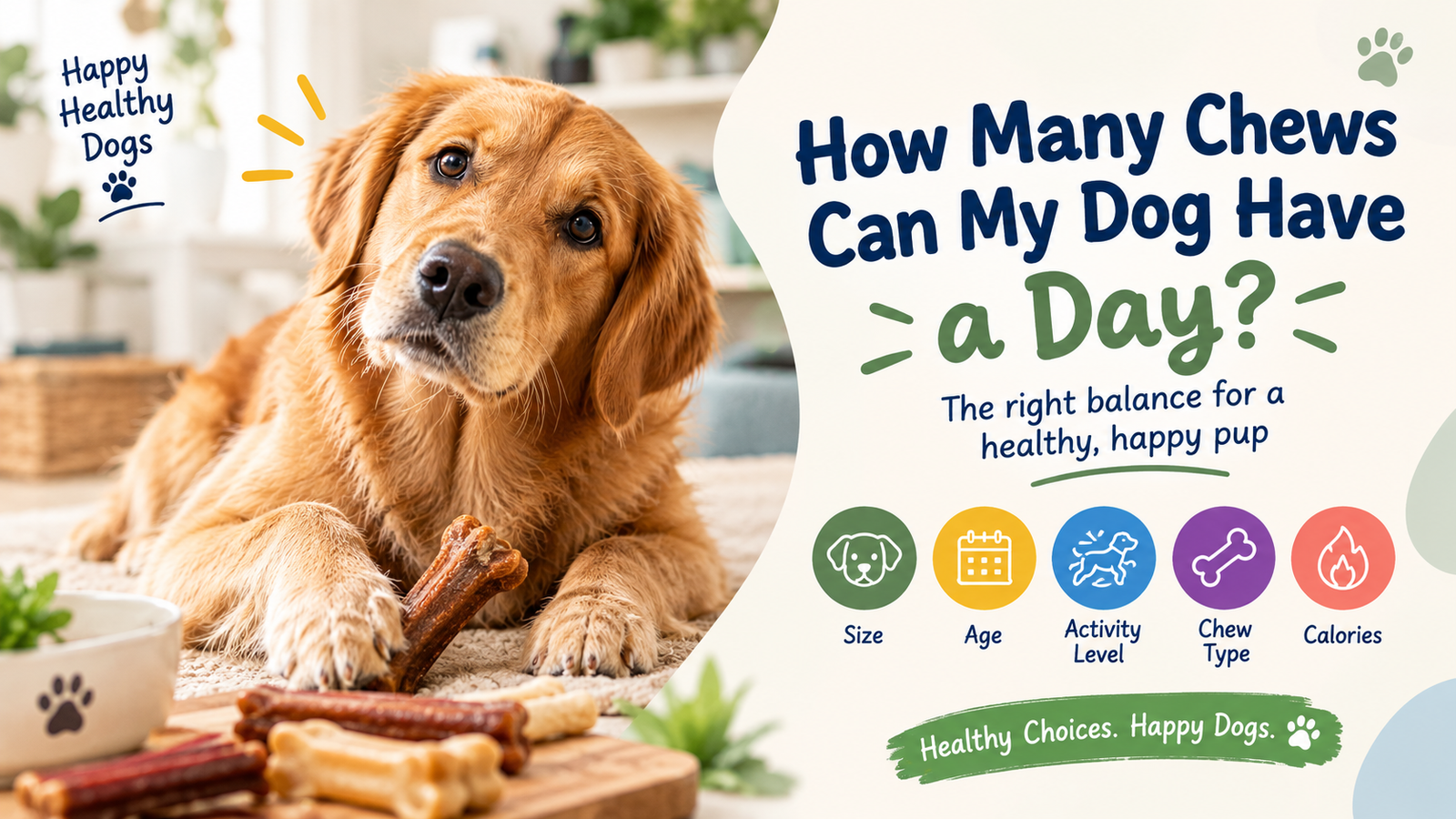
Your dog finishes the last bit of a chew, drops it, and looks up at you. Not to chew at you. Head slightly tilted, eyes doing all the heavy lifting. The message is unmistakable. Surely there is another one in the cupboard?

Most dog owners know that subtle moment of hesitation. Chewing feels like a simple act of care that keeps a dog happy and occupied, so saying no isn’t always easy. But behind that hopeful expression lies a question that catches many owners off guard how many chews can a dog actually have before it becomes too many?
The challenge is that counting chews by number alone hides a critical detail. A single chew can be anything from a light 15-calorie treat to a dense chew packing over 200 calories. Because chews vary dramatically in size, ingredients, density, and texture, one chew for one dog can mean something entirely different for another.
Understanding how to set a safe daily limit isn’t about following a rigid count it comes down to evaluating your dog’s age, weight, and activity level against what is actually inside the chew.
Direct Answer: How Many Chews Are Safe Per Day?
If you are looking for a practical baseline, think of chews as part of your dog’s overall daily food allocation rather than a separate category of food.
A widely cited general benchmark in pet care is that all treats and extra chews combined should generally account for no more than 10% of a dog’s total daily calories. The remainder should come primarily from a complete and nutritionally balanced diet.
Depending on the size of the dog and the type of chew, some dogs can safely enjoy a chew daily, while others such as smaller breeds, less active pets, or dogs on tailored weight-management plans, may need them less frequently or require lower-calorie options.
To figure out what works for your dog, you have to look past the count and look at the chew itself.
Core Rule: Why One Chew Does Not Equal One Chew
Factor | What You See | What It Means Nutritionally |
Piece Count | 1 Chew | Can hide anywhere from 15 to 200+ calories. |
Chew Density | Same Physical Size | A dense, fatty chew contains far more energy than a light, porous one. |
Dog Size Impact | 1 Chew for a Small Dog vs. Large Dog | A single chew can be a minor snack for a 70 lb dog, but equal an entire day’s extra calorie budget for a 10 lb dog. |
Why Counting One Chew Can Be Misleading
Saying “my dog only had one chew today” can mean two completely different things nutritionally.

Consider two popular chews sitting side by side:
- A thin, soft meat strip: A dog finishes this in under two minutes. It offers quick satisfaction, but because it disappears fast, it can be easy to offer a second one without realizing how quickly the extra calories add up.
- A dense, long-lasting chew: This keeps a dog happily busy for a long period. The calories are consumed more slowly over time, but the total energy content can still be substantial.
Chew Type | Typical Texture & Duration | Calorie Consideration | Key Safety & Feeding Consideration |
Soft Chews | Pliable consumed quickly in minutes. | Moderate to low per piece, but easy to overfeed. | Portion control is critical to keep track of total pieces handed out. |
Long-Lasting Chews | Dense or tough consumed slowly over extended time. | Often high in total calorie density. | Remove small worn-down ends to prevent swallowing hazards. |
Semi-firm with functional ridging; moderate duration. | Formulated for daily use within set calorie targets. | Follow manufacturer serving sizes matched to your dog’s weight. | |
High-Calorie Chews | Rich, fat- or meat-heavy; duration varies. | It consumes a large portion of the daily treat budget. | Limit frequency, especially for small or less active dogs. |
Hard Chews | Rigid and unyielding long duration. | Calorie content varies depending on animal or synthetic base. | Assess dental health rigid materials carry a risk of tooth fractures. |
- Soft Chews: Fast to consume and moderate in energy density, but easy to overfeed if handed out casually.
- Long-Lasting Chews: Excellent for extended mental focus, though often higher in total energy content.
- Dental Chews: Formulated for oral hygiene, typically with weight-specific feeding directions from the manufacturer, often one per day.
- High-Calorie Chews: Products rich in meats, fats, or added binders can rapidly consume a smaller dog’s daily treat allowance in a single session.
- Hard Chews: Last a long time, but their rigidity presents a potential risk for tooth fractures if not selected carefully for your dog’s specific chewing style.
- Life-Stage Considerations: What Matters Most at Each Age?
Puppies: Chew Development and Safety
Puppies experience strong chewing urges, particularly during the teething phase between three and six months of age. While it is tempting to offer anything that keeps them busy, puppies have delicate digestive systems and developing milk teeth.
- Primary Focus: Select chews specifically formulated for puppy jaws and softer teeth.
- Safety Priority: Always supervise puppy chewing sessions. Puppies are enthusiastic but inexperienced, often trying to swallow large pieces whole. Remove small remnants as soon as they wear down to a size that could pose a choking or blockage hazard.
Adult Dogs: Calorie Balance and Activity Level
For adult dogs, dietary needs are primarily influenced by overall energy expenditure and daily routine.

- Primary Focus: Match chew selections to your dog’s activity level and regular diet. Highly active or working dogs naturally have higher overall daily energy requirements than companion dogs with quieter routines, providing slightly more flexibility for extra treats. However, higher activity does not mean extra calories disappear automatically chews still need to be factored into their overall daily food plan.
Senior Dogs: Dental Health and Metabolic Changes
Older dogs still enjoy the mental stimulation of chewing, but physical changes call for a more tailored approach.
- Primary Focus: Aging teeth and gums may become sensitive, making extremely dense or rigid chews uncomfortable or unsafe. Softer, more pliable chews offer a gentler option for senior jaws. Additionally, as activity levels decline with age, monitoring extra calories helps prevent unwanted weight gain that could place unnecessary stress on aging joints.
How Dog Size Changes the Math
Physical size plays a significant role in determining a safe chew allowance because a single product affects dogs of different weights in vastly different ways.
The diagram below provides a purely illustrative example of how a single 40-calorie chew lands against two hypothetical treat budgets. Actual calorie and treat requirements vary substantially between individual dogs and should not be inferred from body weight alone.
Feature | Small Dog Example (~10 lbs) | Large Dog Example (~70 lbs) |
Illustrative Daily Treat Budget | ~30 kcal | ~150 kcal |
40-Calorie Chew Impact | Exceeds illustrative budget | Fits easily into illustrative budget |
- Small Breeds: Small dogs have low daily energy requirements. A chew that appears modest to an owner can easily account for a major portion of a small dog’s total daily extra allowance.
- Large and Giant Breeds: Larger dogs generally need appropriately sized chews that are suitable for their jaw size and chewing style. However, large chews can still pack a heavy caloric punch, meaning portion awareness remains important regardless of breed size.
A Simple Calculation for Your Dog’s Allowance
Determining how a chew fits into your dog’s day does not have to be complicated. Here is a clear three-step method to evaluate their daily allowance:
- Identify the Treat Budget: Determine your dog’s estimated daily caloric needs consult packaging guidelines or your veterinarian and calculate a starting benchmark of up to 10% for treats and extras.
- Deduct Other Extras: Subtract any training rewards, dental treats, or extra snacks provided during the day.
- Compare Against the Chew: Check the product packaging for the calorie count per chew to see if it fits within the remaining allowance.
Hypothetical Example:
- A medium adult dog with an estimated daily requirement of 600 calories would have a 10% treat budget of 60 calories.
- If 20 calories were used for training rewards during the day, 40 calories remain for other treats.
- If a chew contains 40 calories, it fits neatly into that day’s budget. If it contains 90 calories, providing it whole would exceed the guideline, suggesting it might be better to choose a lower-calorie option or adjust other treats given that day.
Tip: Most manufacturers list calorie information on the package or their website. If calorie content is unlisted, contacting the brand or consulting your veterinarian can provide clarity.
Signs Your Dog May Be Getting Too Many Chews
It is easy for extra treats to creep up over time. Here are a few clear indicators that it may be time to scale back frequency or portion size:

- Unintended Weight Gain: A subtle loss of waistline definition or an unexpected increase on the scale during veterinarian checkups.
- Leaving Main Meals: Skipping or refusing complete and balanced commercial food because they are already full from treats and chews.
- Gastrointestinal Sensitivity: Loose stools, extra gas, or mild stomach upset after having rich or frequent chews.
Before Giving Your Dog a Chew: A Quick Safety Checklist
Before handing over a chew, take a moment to run through these key considerations:
- Appropriate Size: Is the chew large enough that your dog cannot accidentally swallow it whole?
- Suitable for Life Stage: Is the texture and size appropriate for your dog’s age and jaw strength?
- Fits Your Dog’s Chewing Style: Is the chew appropriate for your dog’s chewing style and dental health, particularly if your dog is an aggressive chewer?
- Fits the Daily Budget: Have you accounted for the chew’s calories alongside today’s other treats?
- Supervision Available: Will you be nearby to monitor your dog until they finish?
A Note on Dental Safety: There is no universal at-home test to guarantee whether a chew is completely safe for teeth. Extremely hard or unyielding materials can increase the risk of tooth fractures, particularly for powerful chewers or dogs with existing dental concerns. If you are ever unsure about a chew’s hardness or safety, consult your veterinarian for advice tailored to your dog’s oral health.
Conclusion
Determining how many chews your dog can safely enjoy is less about sticking to a rigid numerical rule and more about understanding the big picture. By choosing chews tailored to your dog’s age and size, keeping an eye on overall daily calories, and providing proper supervision, you can make chews a safe, satisfying, and enjoyable part of your dog’s regular routine.
-
 All Products
Goat Milk Powder for Dogs and Cats – 400g
Original price was: ₹1,298.86.₹733.96Current price is: ₹733.96. -
 All Products
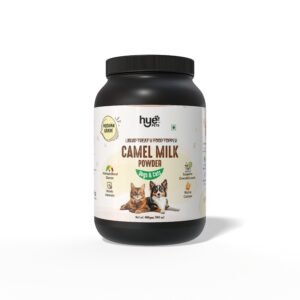
Camel Milk Powder For Dogs and Cats – 400g
Original price was: ₹1,499.75.₹499.00Current price is: ₹499.00. -
 All Products
Super Treats for Super Pets made with Goat Milk, Strawberry and Banana | 30g
Original price was: ₹325.00.₹308.75Current price is: ₹308.75. -
 All Products
Super Treats for Super Pets made with Goat Milk, Pumpkin and Banana | 30g
Original price was: ₹279.00.₹265.06Current price is: ₹265.06. -
 All Products
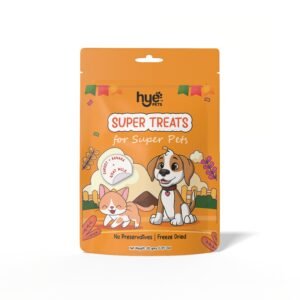
Super Treats for Super Pets made with Goat Milk, Carrot and Banana | 30g
Original price was: ₹279.00.₹265.06Current price is: ₹265.06. -
 All Products
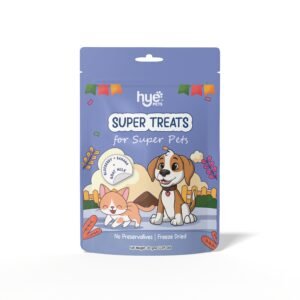
Super Treats for Super Pets made with Goat Milk, Blueberry and Banana | 30g
Original price was: ₹325.00.₹308.75Current price is: ₹308.75. -
 Out of stockAll Products
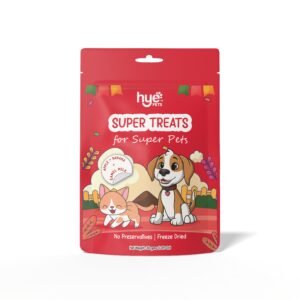
Super Treats for Super Pets made with Camel Milk, Apple and Banana | 30g
Original price was: ₹279.00.₹265.06Current price is: ₹265.06. -
 All Products
Super Treats for Super Pets made Camel Milk, Beetroot and Banana | 30g
Original price was: ₹279.00.₹265.06Current price is: ₹265.06. -
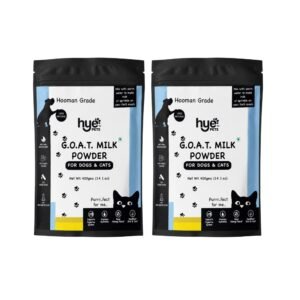 Combos
Goat Milk Powder for Dogs and Cats – Combo Pack (2 x 400g)
Original price was: ₹3,065.28.₹1,680.32Current price is: ₹1,680.32. -
 All Products
Goat Milk Powder for Dogs and Cats – 200g
Original price was: ₹698.99.₹657.05Current price is: ₹657.05. -
 All Products
Goat Milk Powder and Freeze-Dried Goat Milk Treats Combo for Dogs and Cats
Original price was: ₹2,250.26.₹2,067.36Current price is: ₹2,067.36. -
 Combos
Goat Milk Powder and Camel Milk Calcium Bone for Dogs – Combo Pack
Original price was: ₹1,826.47.₹1,108.02Current price is: ₹1,108.02. -
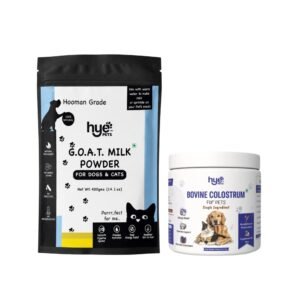 Combos
Goat Milk Powder and Bovine Colostrum Combo for Dogs & Cats
Original price was: ₹2,357.47.₹1,221.30Current price is: ₹1,221.30. -
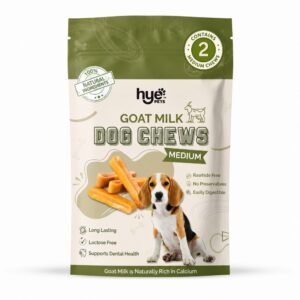 Goat Milk Treats
Goat Milk Dog Chews for Medium Dogs | Rawhide-Free Dental Treats | 2 Chews
Original price was: ₹449.01.₹422.01Current price is: ₹422.01. -
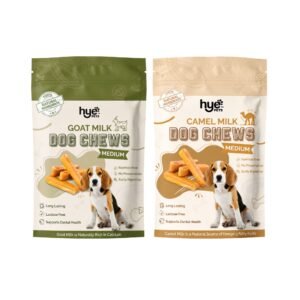 Combos
Goat Milk and Camel Milk Chews Combo for Medium Dogs
Original price was: ₹1,118.64.₹1,019.52Current price is: ₹1,019.52. -
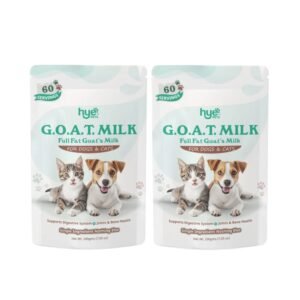 Combos
Full Fat Goat Milk Powder for Dogs and Cats Combo Pack (2 x 200g)
Original price was: ₹1,649.64.₹1,509.22Current price is: ₹1,509.22. -
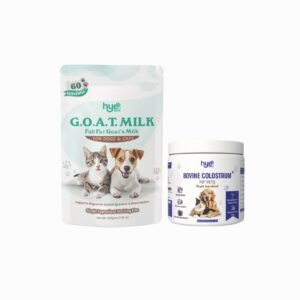 Combos
Full Fat Goat Milk Powder and Bovine Colostrum Combo for Dogs and Cats
Original price was: ₹1,398.01.₹949.01Current price is: ₹949.01.
- All Posts
- Blog
- Blogs
- Recipe
- Stories
- Trivia