It’s a crisp morning walk. You’re holding the leash in one hand, a plastic bag in the other, and enjoying the quiet start to your day until you look down to pick up after your pup.
Wait… is that supposed to be green?
If you’ve ever found yourself staring at your dog’s waste on a sidewalk feeling a mix of confusion and concern, you aren’t alone. While checking your pup’s stool isn’t the most glamorous part of dog ownership, it is one of the easiest, most reliable ways to monitor their daily health.
Our dogs can’t tell us when their stomach hurts, but their stool can offer valuable clues. Here is a straightforward guide to understanding what those daily color changes mean, when to monitor at home, and when it’s time to consult your veterinarian.
Important Note: While stool color is a useful health indicator, color alone cannot diagnose a medical condition. Always consider your dog’s overall behavior, appetite, and energy levels, and consult a qualified veterinarian for an accurate diagnosis.
What Healthy Dog Stool Looks Like
Before examining unusual colors, it helps to know what normal, healthy stool looks like.
- Color: Ideally chocolate brown. This color comes from bile, a fluid produced by the liver that aids in digestion.
- Consistency: Log-shaped and firm enough to hold its form, but soft enough to pick up cleanly without leaving a messy residue on the grass.
When your dog’s daily output consistently fits this description, it is a strong indicator that their digestive tract, liver, and diet are functioning properly.
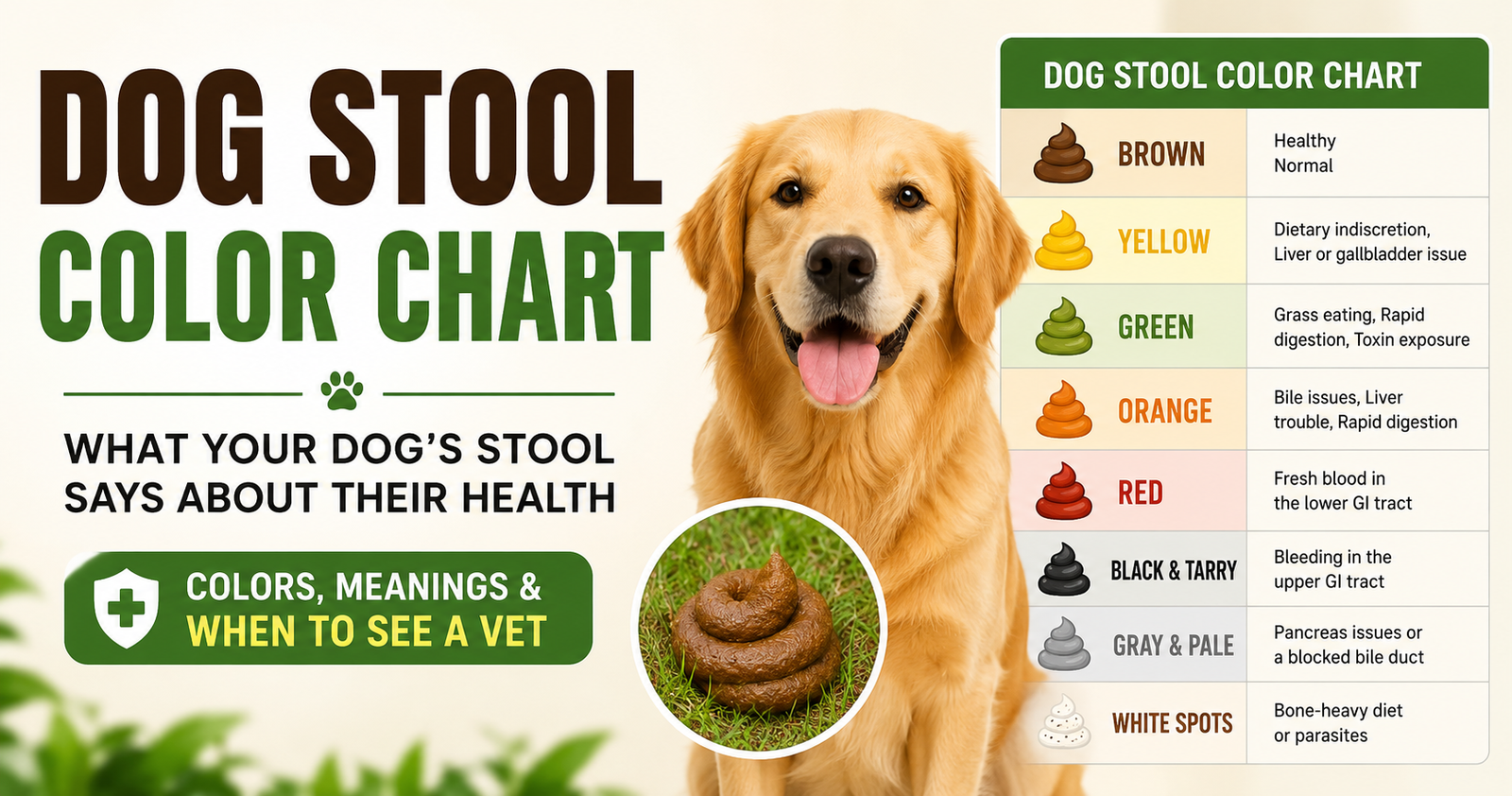
Dog Stool Color Chart (Quick Overview)
Need a quick answer while you’re out on a walk? Here is a breakdown of what each stool color typically signals:
|
Stool Color
|
What It Usually Means
|
Recommended Action
|
|
Chocolate Brown
|
Normal, healthy stool
|
Maintain current diet and routine
|
|
Yellow
|
Dietary indiscretion, liver, or gallbladder issue
|
Monitor closely
|
|
Green
|
Plant eating, rapid digestion, or potential toxin exposure
|
Monitor / Contact veterinarian if persistent
|
|
Orange
|
Bile issues, liver trouble, or rapid digestion
|
Monitor / Contact veterinarian if persistent
|
|
Red
|
Fresh bleeding in the lower digestive tract
|
Contact your veterinarian
|
|
Black & Tarry
|
Bleeding in the upper digestive tract
|
Emergency Contact veterinarian immediately
|
|
Gray & Pale
|
Pancreas issues or a blocked bile duct
|
Schedule a veterinary visit
|
|
White Spots
|
Bone-heavy diet or internal parasites
|
Adjust diet / Schedule a veterinary visit
|
What Each Stool Color Means
When an unexpected shade appears, understanding the cause can help you decide on the appropriate next steps.
Chocolate Brown
- The Scenario: The standard daily output.
- Possible Causes: A well-balanced diet and a properly functioning digestive system.
- What to Do: Simply maintain your dog’s current routine no changes needed!
Yellow
- The Scenario: You notice a mustard-colored stool the day after your dog snuck a greasy slice of cheese off the coffee table.
- Possible Causes: Dietary indiscretion eating rich human food, sudden food changes, or underlying liver or gallbladder issues.
- What to Do: Give it 24 hours if this follows a stolen snack, keeping a close watch on their next bathroom break. Should the yellowish tint continue or turn watery, give your veterinarian a call.
Green
- The Scenario: Your dog spent the previous afternoon eating grass in the backyard.
- Possible Causes: Excessive grass consumption is the most common cause. However, rapid digestion, gallbladder issues, or ingesting green rodent poison can also cause green stool.
- What to Do: Allow a day for plant matter to pass if you caught them grazing outdoors. However, if there is any chance your dog ingested rodenticide, skip monitoring altogether and head straight to an emergency veterinary clinic.
Orange
- The Scenario: The stool appears distinctly orange or pumpkin-colored.
- Possible Causes: Food moving through the digestive tract too quickly to mix properly with bile, minor stomach upset, or liver complications.
- What to Do: Keep an eye on your pup for the rest of the day. If the orange shade fails to clear up after a couple of bowel movements or if vomiting starts, schedule a consultation with your veterinarian.
Red (Fresh Blood)
- The Scenario: You notice bright red streaks on the outside of the stool or mixed inside.
- Possible Causes: Lower intestinal bleeding, inflamed anal glands, straining from constipation, or colitis.
- What to Do: Contact your veterinarian to describe the severity and context. While a single tiny speck can stem from mild straining, visible red blood always warrants professional advice.
CRITICAL WARNING: IMMEDIATE VETERINARY ATTENTION REQUIRED
Black or Tarry Stool
- The Scenario: The stool is dark, sticky, and tar-like.
- Possible Causes: Digested blood from the upper gastrointestinal tract, often caused by stomach ulcers, ingested foreign objects, or severe internal infections.
- What to Do: Treat this as an immediate medical emergency. Do not wait to see if the next bowel movement looks better; black, tarry stool requires urgent veterinary evaluation.
Gray or White
- The Scenario: The stool is pale, clay-colored, or chalky white.
- Possible Causes: A lack of bile reaching the intestines gallbladder or liver blockages, pancreatic issues, or a raw diet excessively high in bone and calcium.
- What to Do: If your pet eats a raw food plan, consult a veterinary nutritionist to rebalance their calcium levels. For dogs on traditional diets, pale or gray stool points to a digestive blockage that requires a veterinary checkup within 24 to 48 hours.
Textures and Other Stool Characteristics
Color provides valuable context, but texture and consistency complete the picture:
- Hard, Pellet-like Droppings: Usually indicates dehydration or constipation.
- Watery Diarrhea: Signals severe digestive irritation or infection. Because dogs can dehydrate rapidly, persistent diarrhea requires prompt attention.
- Mucus Coating: A thin, clear coating can occasionally occur, but heavy or frequent mucus indicates inflammation in the large intestine.
- White Flecks or Rice-like Granules: Small white specks in the stool often indicate tapeworm segments or other internal parasites.
When to Call Your Veterinarian
While minor, occasional stool changes can happen after a new treat, seek immediate professional care if you observe any of these warning signs:
- Black, tarry stool or significant amounts of bright red blood
- Any unusual stool color that persists for longer than 24 to 48 hours
- Stool changes accompanied by vomiting, fever, or lethargy
- A complete loss of appetite or refusal to drink water
- Signs of pain or severe straining during bowel movements
Tips for Maintaining Healthy Digestion
A few consistent habits can help keep your dog’s digestive system functioning smoothly:
- Transition Food Gradually: Never swap dog food brands abruptly. Mix the old and new food over 7 to 10 days to allow their digestive system time to adapt.
- Prioritize Hydration: Ensure clean, fresh water is always available, particularly in warm weather or after exercise.
- Maintain Deworming Schedules: Regular preventive care keeps internal parasites from affecting your dog’s gut health.
- Limit Table Scraps: High-fat human foods are a frequent trigger for severe digestive upset and pancreatitis.
- Schedule Routine Checkups: Annual veterinary exams and fecal screenings help catch underlying issues early.
Conclusion
The next time you are out on a morning walk, take a brief moment to check your dog’s stool before picking it up. That quick habit offers a helpful window into your dog’s internal health often before they show outward signs of illness.
While a temporary color change after a new treat is usually not a cause for alarm, always trust your observations. If an unusual color persists, or if it occurs alongside other symptoms, do not hesitate to contact your veterinarian. They are your best partner in keeping your dog healthy and comfortable.

 All Products
 All Products
 All Products
 All Products
 All Products
 All Products
 All Products
 All Products
 All Products
 Pet Food
 Goat Milk Treats
 All Products
 Camel Milk Treats
 Camel Milk Treats
 All Products