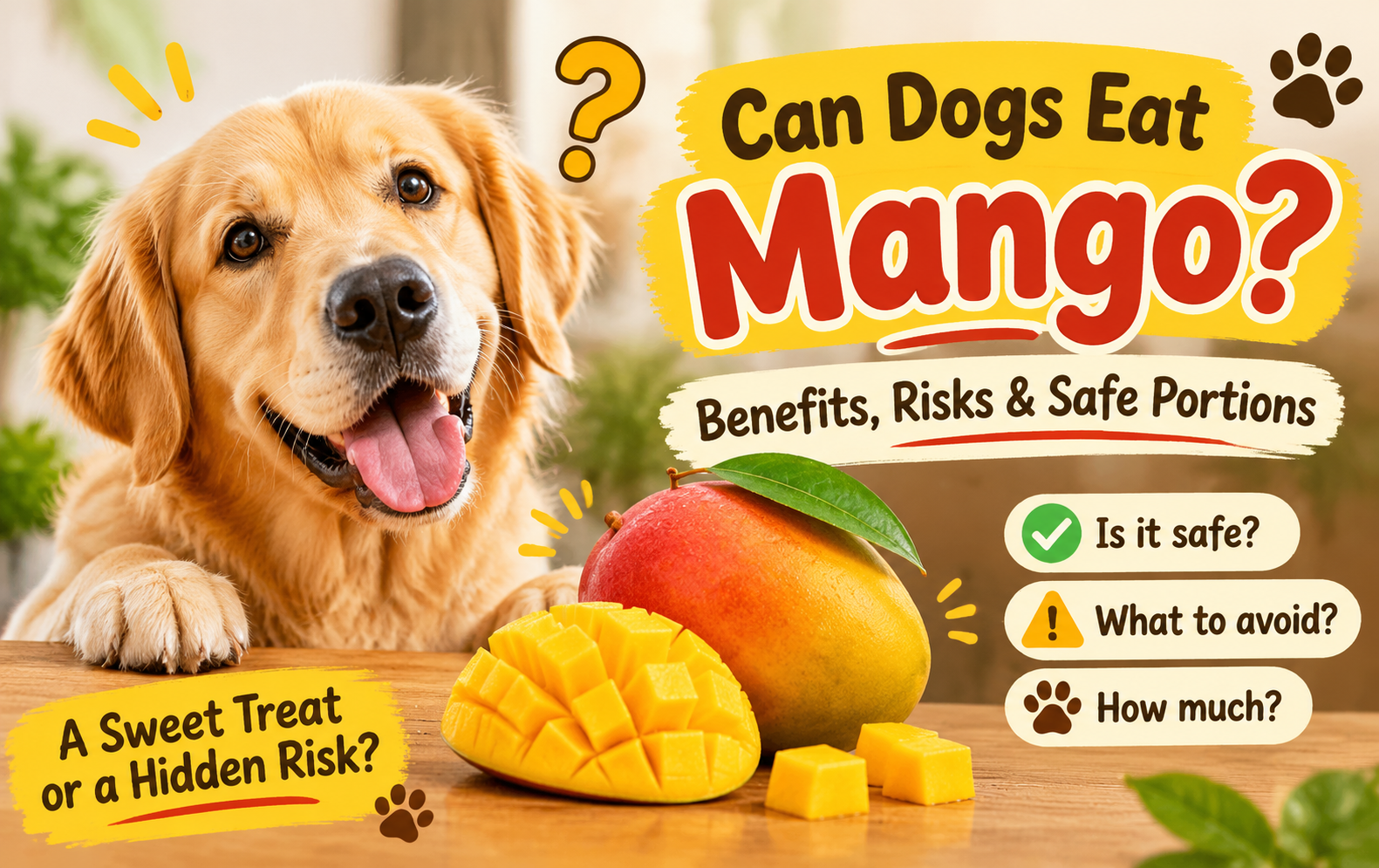
Your Dog Wants a Bite of Your Mango. Should You Share?
You’re cutting into a juicy Alphonso mango when you notice a familiar pair of eyes watching your every move. Your dog is sitting nearby, waiting patiently for a taste. But before you share a piece, one question comes to mind: is mango actually safe for dogs?
The good news is that most healthy dogs can enjoy a little ripe mango flesh as an occasional treat. The important part is knowing what to remove, how much to offer and which precautions to take.
Mango skin and the hard central pit should never be served to your dog. Once you’ve removed them, a few small pieces of soft mango can be a sweet way to include your pet in the summer fun.
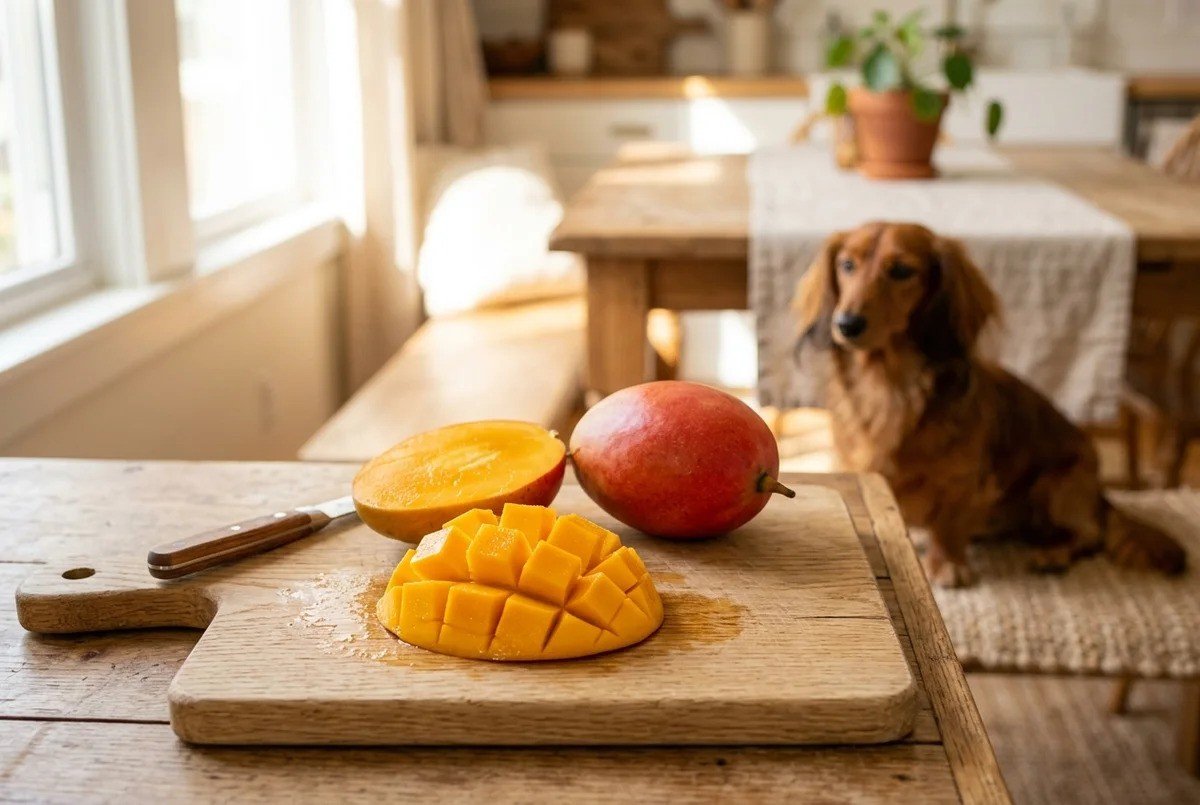
Can Dogs Eat Mango?
Quick answer: Yes. Healthy dogs can eat small amounts of ripe, peeled and pit-free mango flesh. Serve it occasionally, alongside a complete and balanced diet.
Mango isn’t necessary in a dog’s diet, but its soft texture and naturally sweet taste can make it an enjoyable treat.
Because mango contains natural sugars and fibre, too much can upset your dog’s stomach and add unnecessary calories. Keep portions small and remember that treats should never replace your dog’s regular meals.
If you’re unsure how treats fit into your pet’s daily meals, our dog nutrition guide explains the basics of a balanced feeding routine.
What Does Mango Actually Offer Your Dog?
Mango contains several nutrients, but your dog should already get what they need from a complete and balanced diet. A few small pieces provide modest nutritional amounts rather than acting as a vitamin supplement.
Here’s what mango contains:
- Beta-carotene and vitamin A: Beta-carotene gives ripe mango its yellow-orange colour and is converted into vitamin A in the body. Vitamin A supports normal vision, skin health and immune function.
- Vitamin C: Mango contains vitamin C, although healthy dogs can produce their own vitamin C in the liver and don’t need fruit to obtain it.
- Fibre: Mango provides dietary fibre, but eating too much can cause gas or loose stools.
- Vitamin B6: This vitamin helps the body use nutrients for energy and supports normal nervous system function.
- Water: Fresh mango is approximately 83% water, according to USDA FoodData Central. A small serving of mango cannot replace fresh drinking water.
In short, mango can offer a little nutritional variety, but it isn’t a substitute for your dog’s regular food.
How Much Mango Can a Dog Eat?
There’s no scientifically established daily serving limit for mango in dogs. The right amount depends on your dog’s size, calorie requirements, body condition, health and how many other treats they’ve eaten.
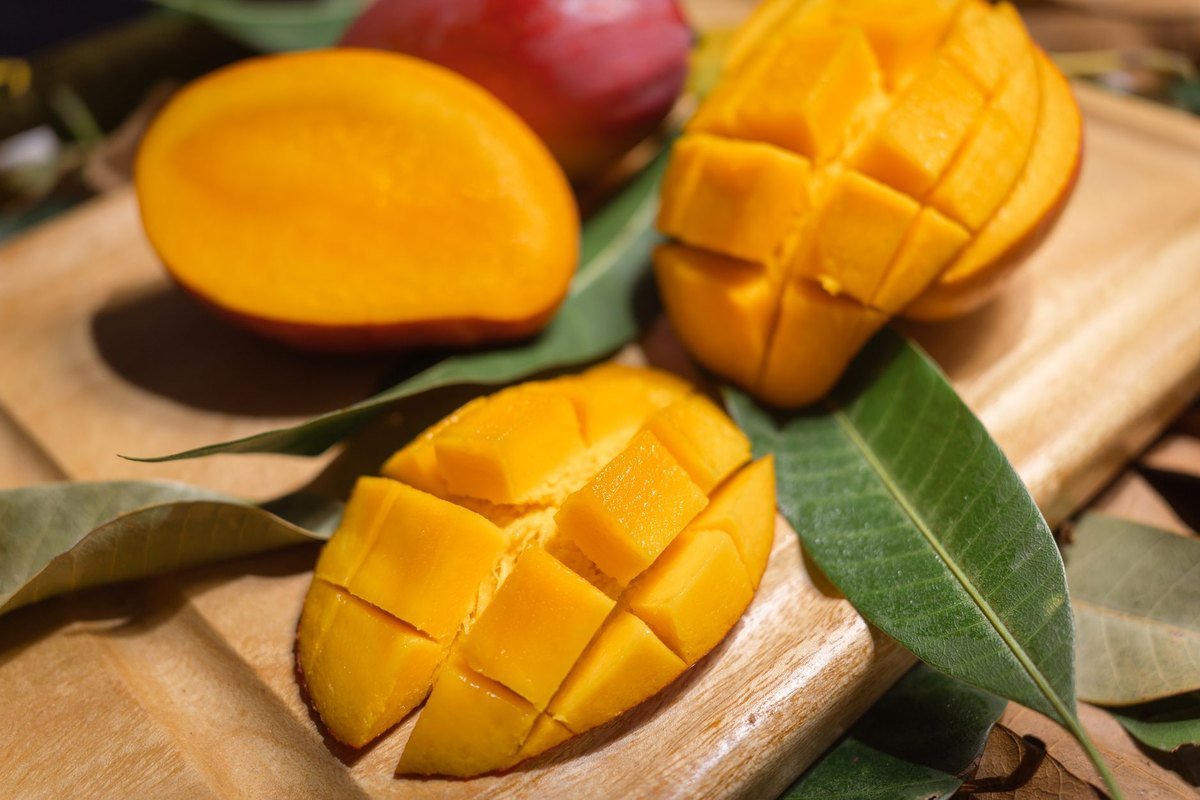
The following table offers illustrative starting portions for healthy adult dogs. These cube counts are not scientifically established veterinary recommendations or guaranteed safe daily allowances. Actual portions should be adjusted to your dog’s individual needs.
Dog Size | Illustrative Starting Portion |
Extra-small (under 5 kg) | 1–2 tiny, fingernail-sized pieces |
Small (5–10 kg) | 2–3 small cubes (about 1 cm each) |
Medium (10–25 kg) | 4–5 cubes (about 1–1.5 cm each) |
Large (25–40 kg) | 5–6 cubes (about 1.5 cm each) |
Extra-large (over 40 kg) | 6–8 cubes (about 1.5 cm each), adjusted to calorie needs |
These are only rough examples. Cube sizes, mango varieties and individual calorie needs vary, so don’t treat the table as a fixed daily allowance.
The World Small Animal Veterinary Association (WSAVA) Global Nutrition Guidelines recommend that all treats combined account for no more than 10% of a dog’s daily calories. The remaining calories should come from a complete and balanced diet.
Remember to count mango alongside biscuits, chews, training rewards and other snacks.
If your dog is overweight, has a sensitive stomach or follows a prescription diet, ask your vet before introducing mango.
Mango Flesh, Skin or Pit: Which Parts Are Safe?
Not every part of a mango belongs in your dog’s bowl. While the soft flesh can be offered in moderation, the skin and pit are best kept out of reach.
Mango Part | Safe for Dogs? | What You Need to Know |
Ripe mango flesh | Yes, in moderation | Soft and suitable in small, bite-sized pieces |
Mango skin | Best avoided | Tough and fibrous, and may be difficult to digest |
Mango pit | No | Can cause choking or an intestinal obstruction |
Mango leaves | Do not offer | Not recommended as food for dogs |
Keep mango pits out of reach. If your family enjoys mangoes regularly during summer, discard the pits in a closed bin where curious pets cannot get to them.
Can Puppies Eat Mango?
Puppies can try a little mango once they are fully weaned and eating appropriate complete puppy food. Because their growing bodies need carefully balanced nutrition, fruit should remain an occasional extra.
If you’re introducing mango:

- Offer tiny, soft pieces: Mash peeled, pit-free mango or cut it into very small pieces.
- Introduce one new food at a time: Start with just one or two tiny pieces.
- Watch for digestive changes: Look out for loose stools, gas or vomiting over the next 24 hours.
- Keep puppy food as the foundation: Growing puppies need complete puppy food to support healthy development.
For very young puppies or those prone to digestive problems, check with your vet before offering fruit.
Can Dogs Eat Frozen Mango?
Yes, dogs can have small pieces of plain frozen mango, provided the pieces are allowed to soften before serving.
On a warm afternoon, slightly thawed mango can make a refreshing occasional treat. To prepare it safely:
- Peel the mango and remove the pit.
- Dice the flesh into small pieces.
- Freeze the pieces without adding sugar or syrup.
- Let them soften slightly before giving them to your dog.
- Supervise your dog while eating.
Avoid hard, frozen chunks that may be difficult to chew or pose a choking risk. Frozen mango is a treat, not a way to prevent dehydration or heatstroke. Always provide fresh drinking water.
What Happens If Your Dog Eats Too Much Mango?
A little mango may be fine, but a large serving can cause problems. Here are four things to watch for:

1. Digestive Upset
Too much mango can cause diarrhoea, gas or vomiting because of its fibre content and natural sugars. Some dogs may also have a lower tolerance for unfamiliar foods.
2. Extra Calories
Mango contains natural sugars and calories. Frequent or oversized servings can add to your dog’s daily calorie intake and contribute to weight gain.
3. Choking or Intestinal Blockage
Large pieces of mango can be difficult to swallow. The hard central pit is particularly dangerous because it can cause choking or an intestinal obstruction. PetMD also highlights the risks associated with feeding mango improperly.
4. Possible Food Sensitivity
Some dogs may react poorly to a new food. Watch for itching, vomiting, loose stools or changes in appetite. Stop offering mango if you notice a reaction, and contact your vet if symptoms are severe or persistent.
Safe Ways to Prepare Mango for Your Dog
Preparing mango for your dog doesn’t take long, but a few simple steps can make sharing it safer:
- Choose ripe mango: Pick soft, ripe fruit rather than firm, unripe green mango (kairi).
- Wash the fruit: Rinse the outside under running water before cutting.
- Remove the skin and pit: Peel the mango, cut the flesh away from the central pit and discard both safely.
- Cut it into small pieces: Choose a size your dog can comfortably manage. You can also mash a little flesh onto a lick mat.
- Start small: Offer one or two pieces the first time and watch for digestive changes over the next 24 hours.
Avoid giving your dog mango preparations containing added sugar, syrup, spices or other ingredients that may be unsuitable for pets.
Your Dog Swallowed a Mango Pit. What Should You Do?
A mango pit can be a serious hazard if swallowed. It may cause choking or become lodged in the digestive tract, potentially leading to an intestinal blockage.
If your dog swallows a mango pit:
- Clear away the remaining fruit: Remove any other pits, peels or pieces within reach.
- Contact your vet immediately: Call your veterinarian or an emergency animal clinic, even if your dog seems fine.
- Don’t wait for symptoms: An obstruction may not cause obvious signs straight away. Get veterinary advice promptly.
- Don’t induce vomiting: Never try to make your dog vomit unless a veterinarian specifically tells you to. Bringing up a large, rigid pit could cause further injury or choking.
Watch for warning signs such as repeated vomiting, retching, lethargy, abdominal discomfort or loss of appetite. Seek urgent veterinary care if any of these occur.
Conclusion:
So, can dogs eat mango? Yes, most healthy dogs can enjoy a few small pieces of ripe mango flesh now and then.
Just remember the essentials: remove the skin, discard the pit and keep portions small. Mango should remain an occasional treat alongside your dog’s regular complete and balanced food.
That way, when mango season arrives and your dog gives you those hopeful eyes, you can share a little more confidently.
-
 All Products
Goat Milk Powder for Dogs and Cats – 400g
Original price was: ₹1,298.86.₹733.96Current price is: ₹733.96. -
 All Products
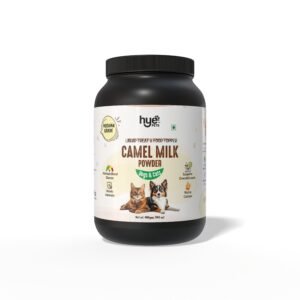
Camel Milk Powder For Dogs and Cats – 400g
Original price was: ₹1,499.75.₹499.00Current price is: ₹499.00. -
 All Products
Super Treats for Super Pets made with Goat Milk, Strawberry and Banana | 30g
Original price was: ₹325.00.₹308.75Current price is: ₹308.75. -
 All Products
Super Treats for Super Pets made with Goat Milk, Pumpkin and Banana | 30g
Original price was: ₹279.00.₹265.06Current price is: ₹265.06. -
 All Products
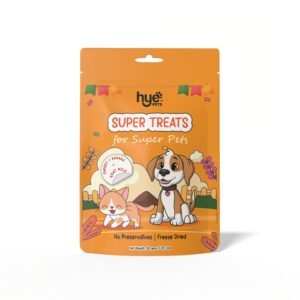
Super Treats for Super Pets made with Goat Milk, Carrot and Banana | 30g
Original price was: ₹279.00.₹265.06Current price is: ₹265.06. -
 All Products
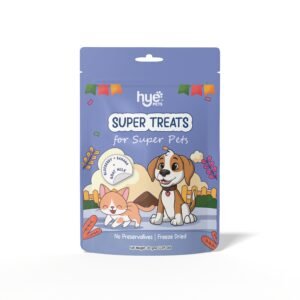
Super Treats for Super Pets made with Goat Milk, Blueberry and Banana | 30g
Original price was: ₹325.00.₹308.75Current price is: ₹308.75. -
 All Products
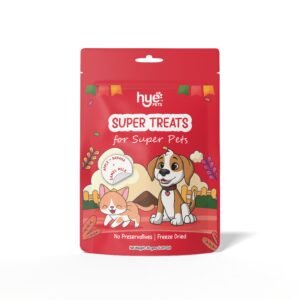
Super Treats for Super Pets made with Camel Milk, Apple and Banana | 30g
Original price was: ₹279.00.₹265.06Current price is: ₹265.06. -
 All Products
Super Treats for Super Pets made Camel Milk, Beetroot and Banana | 30g
Original price was: ₹279.00.₹265.06Current price is: ₹265.06. -
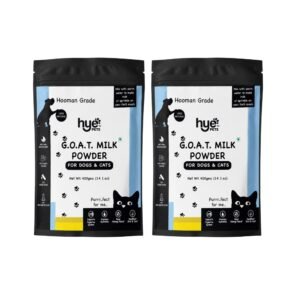 Combos
Goat Milk Powder for Dogs and Cats – Combo Pack (2 x 400g)
Original price was: ₹3,065.28.₹1,680.32Current price is: ₹1,680.32. -
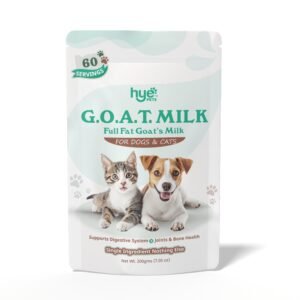 All Products
Goat Milk Powder for Dogs and Cats – 200g
Original price was: ₹698.99.₹657.05Current price is: ₹657.05. -
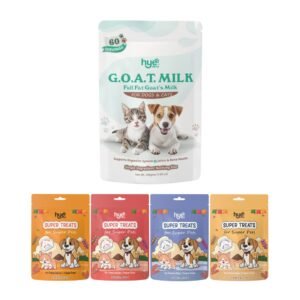 All Products
Goat Milk Powder and Freeze-Dried Goat Milk Treats Combo for Dogs and Cats
Original price was: ₹2,250.26.₹2,067.36Current price is: ₹2,067.36. -
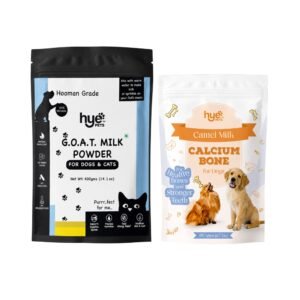 Combos
Goat Milk Powder and Camel Milk Calcium Bone for Dogs – Combo Pack
Original price was: ₹1,826.47.₹1,108.02Current price is: ₹1,108.02. -
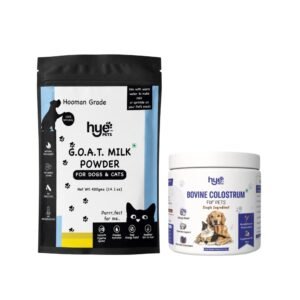 Combos
Goat Milk Powder and Bovine Colostrum Combo for Dogs & Cats
Original price was: ₹2,357.47.₹1,221.30Current price is: ₹1,221.30. -
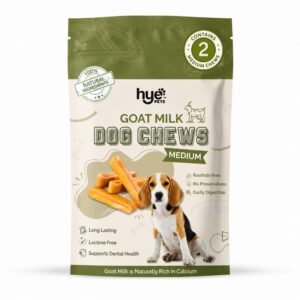 Goat Milk Treats
Goat Milk Dog Chews for Medium Dogs | Rawhide-Free Dental Treats | 2 Chews
Original price was: ₹449.01.₹422.01Current price is: ₹422.01. -
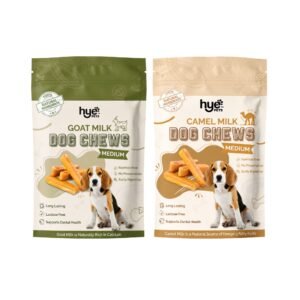 Combos
Goat Milk and Camel Milk Chews Combo for Medium Dogs
Original price was: ₹1,118.64.₹1,019.52Current price is: ₹1,019.52. -
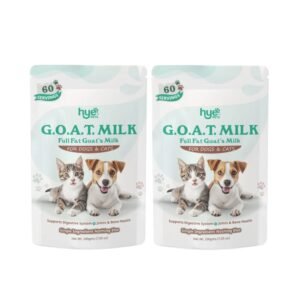 Combos
Full Fat Goat Milk Powder for Dogs and Cats Combo Pack (2 x 200g)
Original price was: ₹1,649.64.₹1,509.22Current price is: ₹1,509.22. -
 Combos
Full Fat Goat Milk Powder and Bovine Colostrum Combo for Dogs and Cats
Original price was: ₹1,398.01.₹949.01Current price is: ₹949.01.
- All Posts
- Blog
- Blogs
- Recipe
- Stories
- Trivia