It’s 2:00 AM. The house is silent until you’re jolted awake by that unmistakable, frantic whining. Or worse the rhythmic, desperate scratching of paws against the carpet. You sprint down the hallway in the dark, praying you make it to the back door before your rugs take the hit.
Dealing with a dog’s sudden case of the runs is stressful and messy. Beyond the broken sleep, there’s that heavy worry as you look at your pup’s droopy ears. You start second-guessing every detail. Did they sneak something out of the bin? Are they in pain? Is this an emergency?
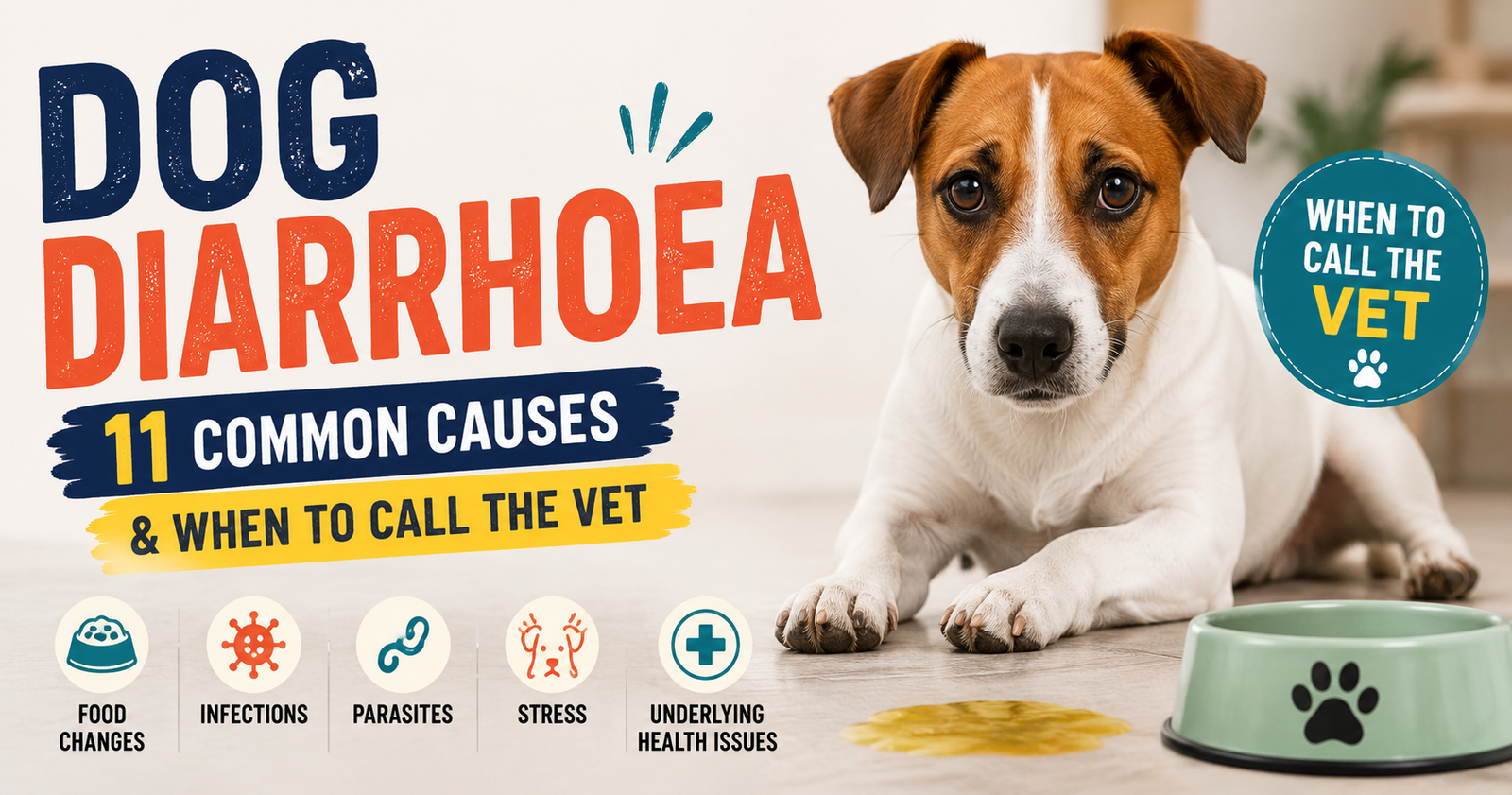
While diarrhoea is one of the most common reasons for vet visits, most cases are temporary and manageable. This guide will help you identify the likely cause and determine whether you can manage it at home or need professional help.
2. Why Is My Dog Having Diarrhoea?
Diarrhoea isn’t a disease, it’s a symptom. It is your dog’s built-in rapid-flush mechanism to rid their gastrointestinal tract of something they don’t like. Because a dog’s digestive system is incredibly sensitive, almost anything from a new treat to a stressful car ride can throw it off balance.
To help you decide on the next steps, let’s break down the 11 most common culprits.
3. Food-Related Triggers
Most digestive upsets begin in the kitchen. Your dog’s stomach is a finely tuned machine that doesn’t always react well to surprises.
- Cause 1: Sudden Food Changes: A dog’s gut relies on specific microbes to digest their meals. If you switch their kibble brand overnight, those microbes are caught off guard. The Fix: Always transition to a new diet over 7 to 10 days by gradually increasing the ratio of new food to old food.
- Cause 2: Table Scraps and Rich Foods: Those puppy-dog eyes are hard to resist, but sharing fatty foods like bacon, gravy, or buttered potatoes is a major trigger for distress. In severe cases, high-fat foods can lead to pancreatitis, a painful inflammation of the pancreas that requires urgent veterinary care.
- Cause 3: Food Allergies and Intolerances: A food intolerance is a simple digestive disagreement like lactose intolerance. A true food allergy is an immune reaction, typically to a protein like chicken or beef. Common signs of an allergy include chronic ear infections or intense paw licking alongside loose stools.
4. Dietary Indiscretion (Scavenging)
As every owner knows, if you turn your back for a second, your dog might explore the world with their mouth.
- Cause 4: Garbage and Spoiled Food: Often called garbage gut, ingesting bacteria and moulds from household trash causes sudden, foul-smelling stools.
- Cause 5: Toxic Substances: This is a critical category. Items like chocolate, grapes, onions, and human medications like ibuprofen are highly poisonous. If you suspect your dog has ingested a toxin, contact a vet immediately.
- Cause 6: Outdoor Scavenging: Drinking stagnant puddle water or finding treats on a trail can introduce bacteria and parasites into your dog’s system instantly.
5. Hidden Infections
Sometimes, the problem is a microscopic hitchhiker. These are standard issues that vets see daily and can usually be resolved with targeted treatment.
- Cause 7: Parasites: Organisms like Giardia or various worms live in soil and standing water. Your dog can ingest them simply by licking their paws after a walk.
- Cause 8: Bacterial Infections: Much like human food poisoning, dogs can contract Salmonella or E. coli from contaminated water or raw meat, resulting in watery diarrhoea and a lack of energy.
- Cause 9: Viral Infections: The most serious threat is Parvovirus, a highly contagious and life-threatening virus that attacks the intestinal lining. It is especially dangerous for unvaccinated pups.
6. Stress and Anxiety
Dogs are creatures of habit. When a dog is stressed, their body releases hormones that can cause the colon to spasm, moving waste through the system too quickly to form properly.
- Cause 10: Emotional Triggers: Consider if your dog’s routine has been disrupted by moving house, loud noises like fireworks, a stay at a boarding kennel, or the arrival of a new family member.
7. Underlying Health Conditions
If the issue is persistent or recurring, it may be related to an ongoing health trend.
- Cause 11: Chronic Conditions & Side Effects:
- IBD: Inflammatory Bowel Disease involves chronic irritation of the gut lining.
- Medication: Antibiotics often disrupt good gut bacteria.
- Secondary Symptoms: Recurring diarrhoea can occasionally signal that another organ, such as the liver or kidneys, needs a check-up.
8. Signs You Should Never Ignore
Use this checklist to determine if your dog needs a vet visit today.
|
Red Flag Symptom
|
Action Required
|
|
Blood in Stool
|
Contact the vet, look for bright red or dark, tar-like poop.
|
|
Vomiting
|
Contact the vet if they can’t keep water down.
|
|
Dehydration
|
Contact vet if gums feel dry/sticky or skin doesn’t snap back.
|
|
Lethargy
|
Contact a vet if your dog is unusually weak or won’t get up.
|
|
Duration
|
Contact the vet if symptoms last more than 48 hours.
|
Note: If your dog is a puppy, a senior, or has an existing illness, skip the 24-hour observation period and call your vet immediately.
9. At-Home Care Tips
If your dog is acting like themselves and has no red flags, you can support their recovery with these steps:
- Hydration is Priority: Ensure they have constant access to fresh water. You can offer unseasoned, low-sodium bone broth to encourage drinking.
- The Bland Diet: Feed equal parts boiled, skinless chicken breast and plain white rice, no seasonings or oils. This is gentle on the stomach and helps firm up stools.
- Skip Human Meds: Never give your dog human medications like Imodium without a vet’s express permission. Dosages are very different and can worsen certain infections.
Prevention 101
- Secure the Bin: Use a dog-proof kitchen bin to prevent scavenging.
- Keep it Consistent: Stick to a high-quality, stable diet and limit table scraps.
- Routine Care: Stay current with vaccinations and parasite prevention.
Final Thoughts
It is completely natural to feel anxious when your best friend isn’t feeling their best. Most cases of dog diarrhoea clear up quickly with rest and a bland diet. However, you know your dog better than anyone if your gut feeling says something is wrong, or if you feel at all unsure, a quick call to your vet is always the safest, right move. You’ll both be back to a full night’s sleep soon!

 All Products
 All Products
 All Products
 All Products
 All Products
 All Products
 All Products
 All Products
 All Products
 Pet Food
 All Products
 All Products